HOME / WHY AYURVEDA

THE ANCIENT SCIENCE OF LIFE

Ayurveda described in brief is quite literally the “Science of Life,” -Ayur meaning “Life” and Veda meaning “Science,”
Originated over 5000 years ago in the subcontinent of India, Ayurveda is a holistic ancient Indian science of health and wellness, passed down through generations and still revered today for its efficacy and use of natural herbal and mineral ingredients.
It combines ancient knowledge of all matters that encompass life with a purpose to bring balance within the humon body. It considers the person as a whole, le., the body along with the mind and focuses on restoring the balance within the human body.
Since time immemorial, Ayurveda has been revered for its essence of the synergy of the mind and body. Its approach towards addressing deep-rooted causes of oilments that go much beyond their mere symptoms and providing effective solutions found in nature itself has made it stand a class apart.


THE FIVE PRINCIPLES OF AYURVEDA

According to Ayurveda, everything is composed of five elements: air, fire, water, earth, and ether. From thought to plants, to the human being, the five elements are the building blocks of all matter. Predominance and permutations of elements in each matter makes different types of things in the world.

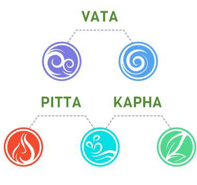
These elements are represented in humans by three “Doshas”, or energies: Vata (motion), Pitta (metabolism), and Kapha (cohesiveness).

VATA

An individual with a dominant Vata is known to be energetic and creative when in balance but fearful, stressed and weight loss & loss of strength and digestive. “scatter-brained” when not. Voto are likely to be thinly built & light with a smaller bone structure. They also have a delicate digestive system and have .

PITTA

A dominant pitto represents an intellectual and intense personality. Pitta are determined, smart, hard- working, and driven (even competitive) when in balance but can be overly angry and aggressive when not. Pittas can be very inflammatory, but they are leaders and organizers.

KAPHA

An individual with a dominant Kapha represents a nurturer with an easy-going nature. Kapha holds a sweet demeanour, lave emotional connections, known for being grounded, supportive, loving and forgiving when in balance but lazy, envious, and sad when not.

Known as the “Mother of all Healing Sciences, Ayurveda contains within the secrets to a healthy and balance lifestyle. We believe that combining ancient ayurvedic science with modern technology and infusing our productswith all the herbal goodness will result in a product that our community can most benefit from.

Product was successfully added to your cart!